
The north-west corner of Upminster’s main crossroads, which was known to many older residents as Burtons Corner and to earlier generations as Chestnuts or Aggiss’s Corner, was developed over a long period.
This area was originally part of the northern portion of the Bridge House estate, which ran on the north side of St Mary’s Lane from the River Ingrebourne to the bottom part of Hall Lane (now Station Road). By 1663 Bridge House was part of Sir Benjamin Wright’s Cranham Hall estate which descended through the Wright family until it was sold by them in 1740 to Thomas Blake of Croydon who in turn sold Bridge House to Richard Newman in 1757. In 1799 William Nokes took over the lease of Bridge House from the previous occupier William Higgs and in 1813 Nokes became the owner.
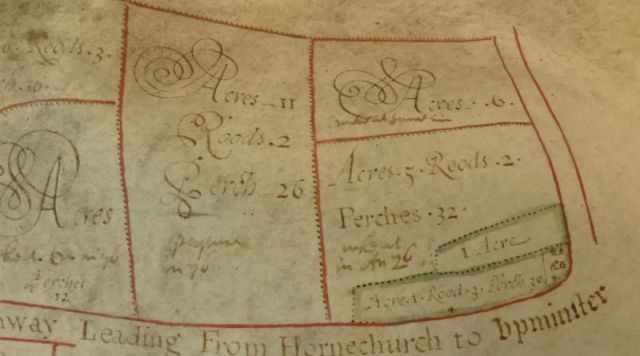
John Coffyn’s 1663 map of Sir Benjamin Wright’s Cranham and Upminster estates shows a three acre plot on this corner site on which there were two buildings, probably cottages. The prominent Upminster carpenter and builder, Samuel Hammond, had by 1799 taken possession of this site.
The earliest reference in Upminster to Samuel Hammond was in May 1773 when he was described in his application for a marriage licence for his wedding to Ann Turner of Upminster as being a carpenter who had been resident in the parish for at least the previous four weeks. Ann Turner was the daughter of Samuel Turner who had farmed Bridge House farm until his death in 1760 when his wife Elizabeth continued the lease. Their son Samuel was a witness to his sister Ann’s 1773 wedding to Samuel Hammond in St Laurence Church, the other witness being Isaac Bone, the village carpenter.
Samuel Hammond is listed for the first time as an Upminster ratepayer in November 1773 when he succeeded Isaac Bone as the occupier of a property which may have been Bone’s house and carpenter’s premises. It is possible that Hammond worked for Isaac Bone and that before his marriage he had lodged with him or elsewhere in Upminster before going into business on his own account at Bone’s former yard. According to Wilson, Samuel Hammond’s first carpenter’s yard was on the site of what later became West Lodge on Corbets Tey Road. Over the next two decades Samuel Hammond developed his carpenter and builder’s business from there before relocating his premises to the corner plot opposite St Laurence Church around 1799.
The Chestnuts and Locksley Villa
In around 1803 or 1804 Samuel Hammond developed a property known as Rose Cottage, which many years later was renamed The Chestnuts after the mature horse chestnut trees in front of the house.
According to Upminster’s historian Thomas Lewis Wilson, around the same year that Hammond built Rose Cottage he also built a cottage to the west of this on the site which had previously been occupied by a wheelwright’s cottage. This was let rent-free by Hammond to his foreman Andrew Wilson, and after Andrew Wilson died in 1807, aged just 53, his widow Elizabeth, assisted by her daughter Jemima, opened a small school in their house, which was said to have had about 50 scholars of both sexes. Andrew Wilson’s grandson T L Wilson was born in this cottage in August 1833.
After the Hammond’s building enterprise was dissolved in 1836, his leading foreman, T L Wilson’s father Thomas Wilson, took over Hammond’s yard, setting up his own carpenter’s business with his brother-in-law Isaac May, another of Hammond’s employees. After Wilson and May’s partnership ended in 1841, Thomas Wilson senior carried on the business until he was forced to relinquish it through ill-health in the early 1860s when his son took over. The Wilson’s carpenter and undertaker’s business operated from this yard until 1868 when they relocated to T L Wilson’s new house America Lodge, built on Station Road (then still known as Hall Lane).

The corner site had remained in the Hammond family’s ownership until 1858 when it was acquired by Thomas Martin, a Hornchurch plumber. After Martin’s death in 1869 it was inherited by his son Stephen Thomas Martin whose wife Charlotte Oxley, daughter of the village tailor and parish clerk Jesse Oxley, had lived at Rose Cottage before her marriage. After Stephen Martin’s sudden death in 1881 after “a fit of apoplexy”, his widow Charlotte continued to own the site, living in Rose Cottage (which had been renamed The Chestnuts before 1894) with her young children George (b. 1875) and Emily (b.1876) until her own death in 1899. The property passed to her son George who was still living there with his sister Emily in April 1901.
William (“Billy”) Aggiss, who had started in business as a jobmaster, hiring out cabs, horses and carts and offering livery stables from a site behind the Bell Inn, moved his home and business premises to The Chestnuts before 1905, and he had succeeded George Martin as the owner by 1915. For information about Billy’s youngest daughter Lily Aggiss (1891-1925) please see HERE.

As technology developed after the First World War, Billy Aggiss’s business changed from hiring out horses and carts to becoming a “haulage contractor”. Motorised vehicles replaced horse drawn transport and by the early 1920s the business became Aggiss and Son as Billy’s son Henry James Aggiss joined him after his war service. The services expanded beyond haulage to include removals, a chauffeur’s service and a hearse. After Billy Aggiss died in January 1939 aged 86 his son continued the business. By September 1939 Henry Aggiss was described as a Garage Proprietor, as the focus of the business had changed to include motor repairs and petrol sales, while the haulage trade was discontinued and the former stables gave way to a car sales showroom, mainly selling Austin cars.
After Henry Aggiss died in 1950 his two sons, George and James, successfully carried on the business for the next 30 years, retiring in 1980. The Chestnuts Garage was superseded in turn by Pit Stop Auto Services Ltd, Superdrive Motor Centres Ltd and finally by Time Tees Cars. The former Time Tees car sales room was converted to form a Costa Coffee shop which opened in January 2011. A planning application to demolish both the remaining Time Tees buildings and the Costa Coffee Shop and replace them with an 82 bedroom Travelodge Hotel and retail units on the ground floor was submitted in September 2022; this was eventually approved, after appeal, in January 2024. Works commenced on site in summer 2025 which are expected to be competed, and the new premises opened, in summer 2026.

Locksley Villa, a detached red brick three-bedroomed house, was built by the Martin family on the site of the Wilsons’ original cottage adjacent to Rose Cottage, which was demolished after Thomas Wilson and family vacated it when they moved to their new house, America Lodge in 1868.
Locksley Villa had a chequered but interesting history. In the early 1880s George Palmer, a JP who had spent much of his life in India where he was employed in the Bengal Civil Service until his retirement in 1877, came to live at Little Gaynes (as Gaynes Villa on the Gaynes Park Estate was by then known). Palmer, an active Conservative, was instrumental in establishing an Upminster branch of the Primrose League, a national organisation founded in 1883 for promoting Conservative values. He conceived the idea of starting a social club and reading room – which was named the Upminster District Club and Reading Room – and he made a generous contribution to a fund to support its establishment. Palmer took out a lease on Locksley Villa which was offered to the club, which opened there in 1887 with himself as the club’s first president and Champion Edward Branfill of Upminster Hall its Chairman. The intention was to provide lectures, meetings, and reading matter for ‘men of every class’, as well as hosting occasional evening entertainments. However, after Branfill’s death in 1890 and other problems, the Upminster District Club was dissolved in 1896, and George Palmer sold the contents of Locksley Villa by auction in June 1897.
From September 1897 Locksley Villa was occupied by Frederick Prince, a civil engineer and patent agent, and his wife Rose Emilie Prince. Frederick’s long working hours meant that he often stayed at his chambers in Grays Inn, while Rose mostly stayed at Locksley Villa with her 11 cats. This was the case on Wednesday 2nd February 1898 when at around 7pm Rose was seen by a visitor to be alone reading in her bed which was in the kitchen, the warmest room in the house. Around three hours later her neighbour Thomas Covel Thompson arrived home to find Locksley Villa alight and after throwing water on the flames he saw Rose’s burning corpse. An oil lamp was found under her body, and it was likely that she had stumbled and fell and that the fire had been caused by the lamp. Sensational reports in newspapers nationwide said that Rose had “burnt to a cinder”.
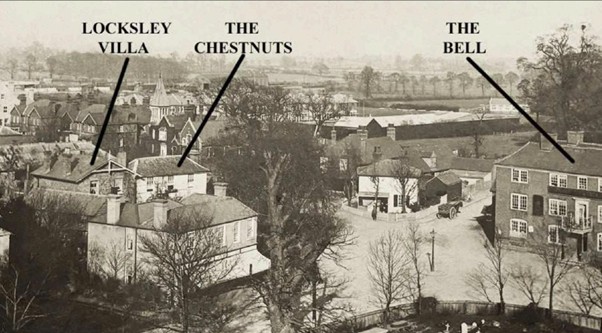
Locksley Villa probably remained empty for almost three years after the fire before Horace Bailey, a stockbroker’s clerk, took over the lease around 1901 before moving to Meadow View in Station Lane a few years later. In March 1905 Locksley Villa was leased by Priscilla Day after she retired after almost 50 years as the landlady of the Bell. Mrs Day died there in September 1907, aged 79 and her eldest daughter Agnes succeeded her but by 1911 Agnes had moved away and was living with her sister Miriam and husband Arthur Ward. By 1912 Mrs Ida Gabriel was the occupier and two years later Locksley Villa was the location of another sudden death when in July 1914 Ida’s uncle Charles Noble, her mother’s 60-year-old brother, collapsed after arriving home from work and died before the doctor could arrive. An inquest found that Noble had died of heart failure, after heart disease.
Before 1918 Billy Aggiss succeeded George Martin as the owner of Locksley Villa, as well as The Chestnuts, and the occupiers were then William Ellis, a labourer with the Midland Railway, and his family. After Billy’s son Henry James Aggiss returned from his war service he moved into Locksley Villa with his wife Cecilia and their daughter Mary Ellen.
After Locksley Villa’s chequered history there was now a period of stability as Henry and Cecilia Aggiss lived and raised their family there for the next 20 years until moving to the recently built 25 Stewart Avenue in 1934.
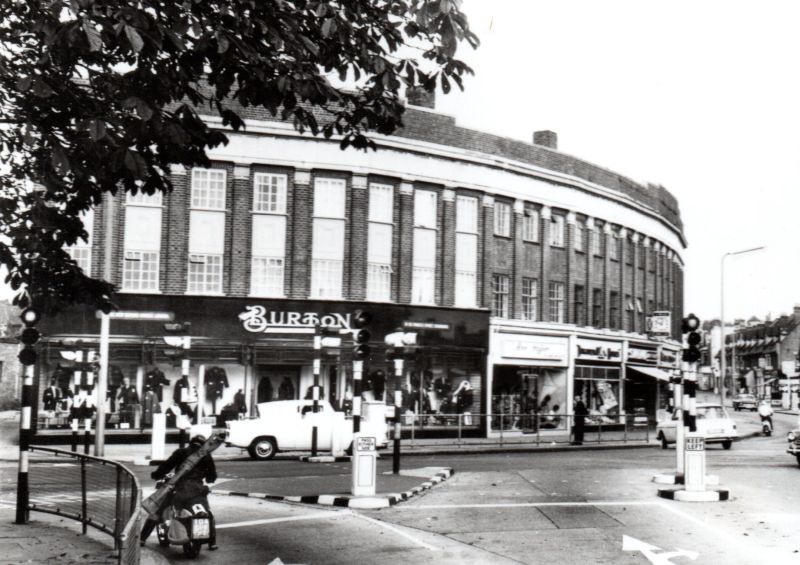
As both The Chestnuts and Locksley Villa were empty from the mid-1930s the site was put up for sale by the Aggisses in 1937. By August that year it was reported that part of this prime site had been sold and that seven shops with living accommodation over were to be erected there. At the start of November 1937 a large crowd watched the demolition of The Chestnuts and Locksley Villa, together with the landmark chestnut tree.
The purchasers were Montague Burton & Co., who already had almost 600 menswear stores around Britain. Many of these stores were purpose-built and sited on prominent corner sites such as that in Upminster, in buildings designed in the Art Deco style by their in-house team of architects under Harry Wilson, who had by 1937 been succeeded by Nathaniel Martin. Burton’s Upminster store occupied the St Mary’s Lane site (numbers 131 & 133) while five other shops in the new development were on the Station Road frontage (numbers 1, 3, 5, 7 and 9). In 1951 these shops were Finlays tobacconists (1), Brighter Homes (3), S. Nead Jewellers (5), Douglas Allen & Co, Estate Agents (7) and Arts & Crafts (9). The former Burton Store is now a Pizza Express restaurant.
The Avenue Cottages
As well as Rose Cottage and the Wilson family house, Samuel Hammond also developed cottages to the north of Rose Cottage which were approached from St Mary’s Lane via an alley to the west of Wilson’s cottage. At the time of Samuel Hammond’s death in 1826 there were two cottages occupied by the village schoolmaster William Crowest and Isaac Hawkins (probably the Isaac Hawkins buried at Upminster aged 87 in January 1827). By 1841 there were now four cottages, occupied by Frederick Coe, Sarah Saggers, Elizabeth Whitehead, and Alice Hawkins (Isaac’s widow, who was buried at Upminster aged 98 in 1842).
The 1910 Finance Act Valuation returns described numbers 1 to 4 The Avenue as a “Block of 4 plaster & slate cottages. (2 lean-to either side). 2 rooms in each”. Rating returns show that these two end lean-to cottages, which were probably added between 1826 and 1841, had a much lower rateable value than the two central, original cottages. Census returns show that these were occupied by either individuals or couples.

These four cottages had formed part the Rose Cottage/The Chestnuts estate and were part of William Aggiss’ purchase in around 1915. By the late-1930s three of these four cottages were empty, as inhabitants had moved out or died, and after the death in early 1941 of Sarah Ann Joslin, the last occupier aged 83, they were demolished in August that year, after which the showrooms and offices at Aggiss’ garage were built.
Seven more cottages were built to the west of Wilson’s yard probably from the late 1840s. Numbers 5 and 6 The Avenue were a pair of substantially brick and slate four-roomed cottages with long gardens, while to the west was a short terrace of five part-brick, rough-cast and slate cottages, numbers 7 to 11 The Avenue. The central three cottages each had four rooms, while at each end were two-room lean-to cottages. The Eldred family lived at Number 10 for over 50 years after they left the living quarters at the forge next to the Bell in 1906, until the youngest daughter Florrie (Florence Ellen) Eldred passed away, aged 83 in May 1963, four years after the death of her elder sister Connie (Constance Kate); Connie had been employed for many years as a teacher at the nearby Girls and Infants School. As was the case with the four original cottages, these seven cottages were left unoccupied as the occupiers died or moved out and they were probably demolished in 1963 soon after Florrie Eldred’s death. The Wilson Road car park now occupies the site.
Shops & Houses
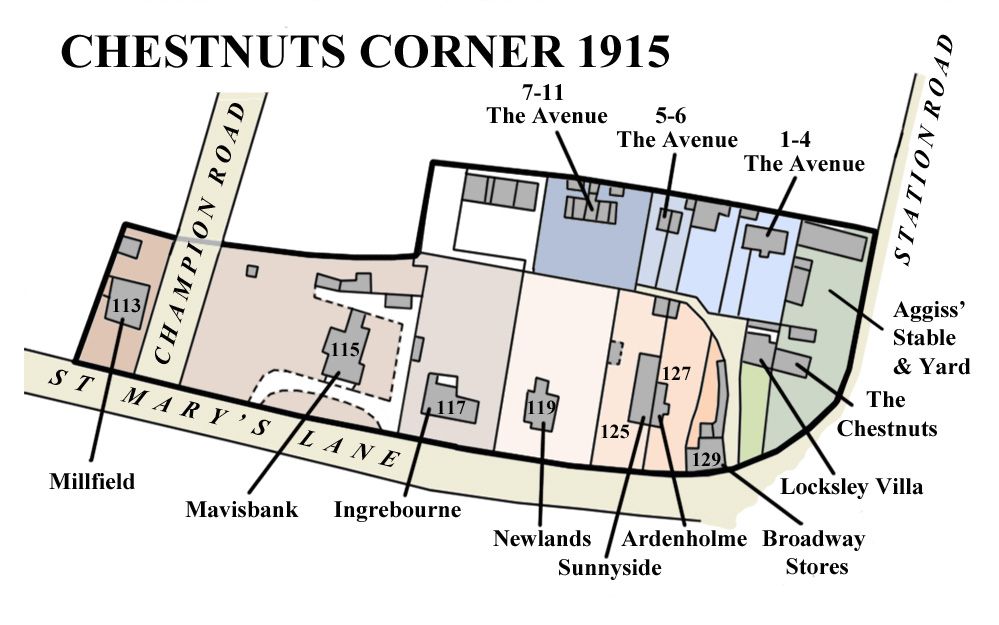
In 1887 Upminster-born Joseph Wenn, who had traded in Fulham as a dairyman and later as a grocer and corn dealer, opened his Broadway Stores (later numbered 129 St Marys Lane) to the west of the alleyway by Locksley Villa. Joseph Wenn was succeeded before 1895 by William John Gooderham’s Grocers and Drapers. A few years later Gooderham added a post office service; he also ran a grocers shop at Corbets Tey. After Gooderham opened his new freehold premises in early 1908 on the corner of Station Road and Howard Road (originally no 14 but later renumbered no 58) the post office business was relocated there, with the Broadway Stores concentrating on the grocers’ trade. Gooderham relinquished all his Upminster stores after the death of his only son in World War One, selling his business to Green Stores of Ilford who were still the store’s owners at the start of the Second World War. By 1951 the former Green Store was occupied by Thameside Printers and the Yorkshire Wool Shop, and by 1961 M A Gould was listed as the occupier.
Margaret A Gould was the first wife of Vivian Gould (1921-1987) who had been involved with Thameside Printing Ltd. at 129 St Mary’s Lane, Upminster, publishing and printing the “Basildon News” every Tuesday from 1953, the “Harold Hill – Harold Wood Independent” every Saturday from 1956, and the “Hornchurch and Upminster News” from 1956 at these premises. Vivian Gould had also been trading as Hornchurch Printing and Publishing Ltd. at 27A North Street, Hornchurch printing GEM’s newspapers, and later at the Caxton Works, Hillview Avenue, Hornchurch. In 1964, GEM Publicity moved to the premises at 129 St Mary’s Lane, where they also published and printed a colour magazine, “Hornchurch Old and New” (“Havering Old and New” from 1964). This was thought to be the first full colour magazine produced for a London borough. By 1968, they had ceased trading, purportedly after a disastrous fire.
The premises were later occupied by Coopers Period Furnishers who sold antique and reproduction furniture. In the late 1970s this building was demolished and replaced by a W H Smith Do It All Store, which in turn was redeveloped in 2005 to form the current Aldi Store.

Four houses were developed on St Mary’s Lane to the west of the Broadway Stores.
A pair of semi-detached houses, Ardenholme (127 St Mary’s Lane) and Sunnyside (125), each with two bedrooms, a parlour, lounge, kitchen, scullery and outside toilet, had been built before 1897, probably for Mrs Charlotte Martin. By around 1910 both had been bought from the Martin family by Herbert Wright, plumber and undertaker, whose business premises were adjacent to the Post Office Cottages on Corbets Tey Road. The Wrights moved to Sunnyside with their two children around 1913, and relocated their business premises to the rear, remaining there until around 1939, when Frank Rivett & Son, the Plaistow based undertakers, took over. In contrast, Ardenholme was occupied by a series of short-term tenants.
Two detached houses, Newlands (119 St Mary’s Lane) and Ingrebourne (117), were developed by William Hook, builder for George Martin in 1901.
Newlands was a three-bedroom house, with two sitting rooms, kitchen, scullery, bathroom and WC. The owner from after the First War was Francis William (Frank) Norledge, a Welsh-born civil servant, and head of the Income Department at the Public Trustee Office. He was active in parish affairs and later became a Director of Roomes Stores Ltd.
In 1902 the daughter of Charlotte Martin, Emily Martin married William George Ennals, son of a Rev George Ennals, a Baptist minister who had retired to Upminster in 1895, and who later lived at the newly built Freshfields, now 265 Corbets Tey Road. The newly married Ennals couple lived at Ingrebourne for around five years after their marriage, later moving to Westcliff where they also called their home Ingrebourne. Upminster’s Ingrebourne was a large, detached four bedroomed house, with three small attic rooms. It was bought by John Frederic Gibbs, a Colonial Merchant in July 1909, and after his death in April 1917 his wife Elizabeth lived there until her own death aged 83 in 1938. It was inherited by their spinster daughters Ethel Goozee and Lilian Goozee Gibbs who sold Ingrebourne to George William Starns of Acacia Drive, Upminster in November 1946 for £4,500.

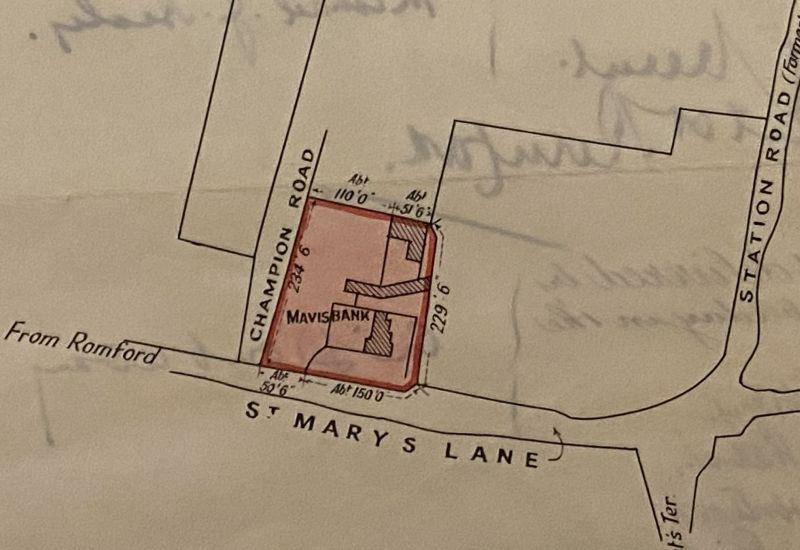
The property later known as Mavisbank (115 St Mary’s Lane) later became the site for St Joseph’s RC Primary School and St Joseph’s Church..
When Samuel Hammond died in 1826 the western part of his small estate by the crossroads passed to his son William Hammond (1787-1862) who in 1841 was still the owner and occupier of what was then an undeveloped pasture. Thomas Turner a Suffolk-born cattle salesman, who then lived at the adjacent Field Cottage, bought the half acre site from William Hammond for £148. In around 1850 Turner built a house on this site which Wilson described in 1856 as a “neat modern cottage with a verandah” which displayed “a taste so creditable to the architect”. Due to Turner’s profession this house became known as Hoof Hall.
After Turner moved to Romford in the early 1850s Hoof Hall was let to a series of tenants over the next two decades whom Wilson named as James Wadeson, Wardell, Captain Williams, Pashley, and Fitzgibbon. It was however through a later occupier that the property attained notoriety. In 1870 a widow, Mrs Susan Wilson and her family, including her daughter Sarah Margaret (known as Margaret) moved there. Mrs Wilson changed the property’s name from the unflattering Hoof Hall to the much more attractive “Mavisbank”. This choice of name remains unclear, but it may be associated with Scotland’s most important small country house of the same name, which may suggest possible links with Mrs Wilson’s Scottish family origins. It was Margaret Wilson’s affair with, and later marriage to, the Rector Rev Philip Holden (described HERE) which was the cause of notoriety, resulting in Mrs Wilson and family moving away from Upminster in late 1872.
Thomas Turner died in 1866 and, under the terms of his will, the surplus from renting Mavisbank were to go to his widow Elizabeth during her lifetime. Elizabeth and the other trustees of her husband’s will were also authorised to sell Mavisbank with the proceeds going to his wife and five children.
In September 1873, after Mrs Wilson had moved out, Mavisbank and its grounds were sold to Col Brydges Branfill (1833-1905) along with other adjoining lands which his mother Mrs Branfill of Upminster Hall, had bought for her son to spend his retirement years. However, Col Branfill chose instead to settle at Burghstead Lodge, Billericay. During Col Branfill’s ownership Mavisbank was successively let to tenants, one of whom was Arthur E Williams who lived there in 1892, before moving to Hoppy Hall in the late 1890s.
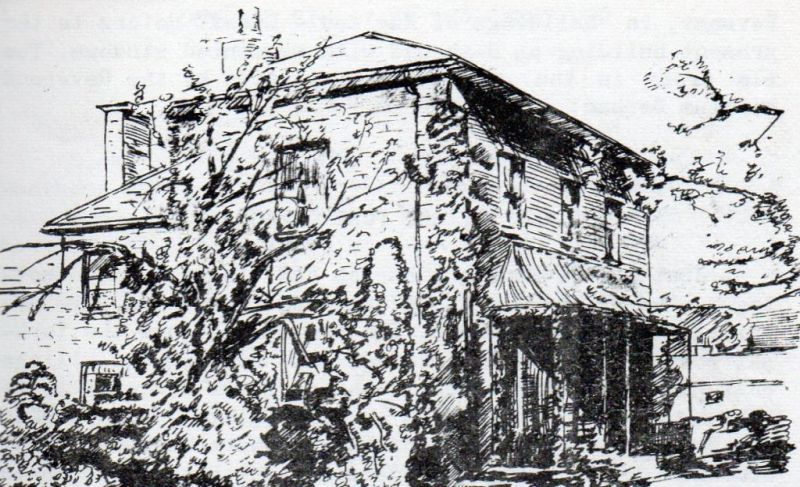
In February 1902 Col Branfill sold Mavisbank and its adjoining lands to Dowsing and Davis, builders of Romford, who continued to lease the house and gardens to tenants, while they developed the Branfill Park Estate (Champion, Gaynes and Branfill Roads) on the main part of their acquisition. Then in March 1906 Dowsing and Davis sold Mavisbank for £1,150 to Mrs Ella Maud Coventry, the wife of the colourfully named John Vladislav Coventry, a shipping clerk who had formerly been an officer in the mercantile marine, born in Russia, his mother’s country of origin. They made additions to the house before moving in.
In the 1910 valuation Mavisbank was described as brick and slated, double-fronted residence with three sitting rooms, four bedrooms, a bathroom and WC, a kitchen, scullery, conservatory, stable and coach house.
In November 1914 Mavisbank was leased to Thomas Cassienet Palmer, an engineer who in August 1919 bought the property from Mrs Coventry, who by then was Mrs Magill, having remarried following the death of her husband the previous year. The 1921 Census shows that the Palmers – Thomas, his wife Elizabeth and 20-year-old daughter Madge – then had two live-in servants, a parlour maid and a cook.
Mavisbank again changed hands in May 1926 when Thomas Palmer sold the premises for £3,000 to Mrs Hettie Lamplough, the wife of Frederick Lamplough a chemist and inventor of Maida Vale, London. The Lamploughs appear to have lived at Mavisbank briefly but after Frederick died in December 1926, leaving an estate worth just £139, a bankruptcy notice was issued against him and the property was put up for sale. The new owner was the Swiss-born Dr Alfred Jacob Brunner who bought Mavisbank from Mrs Lamplough in July 1927 for the same £3,000 that she had bought it for.
Once again, Mavisbank was soon for sale, as by 1931 Dr Brunner had returned to his native Switzerland where he was living in Herrliberg, near Zurich. Mavisbank was purchased from Dr Bunner in September 1931 at a knock-down price of £2,300 by Michael Healy who was the father of Father Michael John Healy, the priest of Upminster’s St Joseph’s Roman Catholic church at the corner of Sunnyside Gardens and St Mary’s Lane which was in need of replacement. The Irish Kerry-born Michael Healy senior had retired to Elm Grove, Dawlish after many years as the manager of the large Knowle and Fortfield Hotels in Sidmouth. Two months later he conveyed Mavisbank to his son which it was later said to be to avoid death duties.
After St Joseph’s Church transferred in December 1932 from St Mary’s Lane to temporary premises on the Mavisbank site, Mavisbank itself became Fr Healy’s Presbytery, where he lived with his assistant priest, Father Horkan (until 1938) and his housekeeper Gertrude Morley. In June 1936 Fr Healy sold the premises to the Catholic Diocese of Brentwood for the same price that his father had bought it for, £2,300.
Both of Fr Healy’s parents died in Devon in 1940 and in 1945 at the end of the war he retired to the west country. He later served as parish priest at Wareham, Dorset and he died in Poole in December 1963, just before his 75th birthday.
Fr Healy was succeeded in September 1945 as parish priest by Fr Michael McKenna who afterwards started a primary school, financed by the parish, in rooms at Mavisbank. The school was recognised by the Ministry of Education in 1953 as a temporary annexe to St Mary’s School, Hornchurch with a capacity of 110 pupils.
In January 1954 Ingrebourne, the house adjacent to Mavisbank, was sold by the owner George Starns to the Diocese for £6,000 and it initially became a temporary Presbytery. This allowed Mavisbank, by then over 100 years old, to be demolished and the purpose-built St Joseph’s Primary School to be built on the site, opening in September 1956 with Sister M. Immaculata as Headmistress. A new Presbytery was built on the church site in 1959, and the temporary Presbytery at Ingrebourne was demolished and replaced by the existing Social Centre.
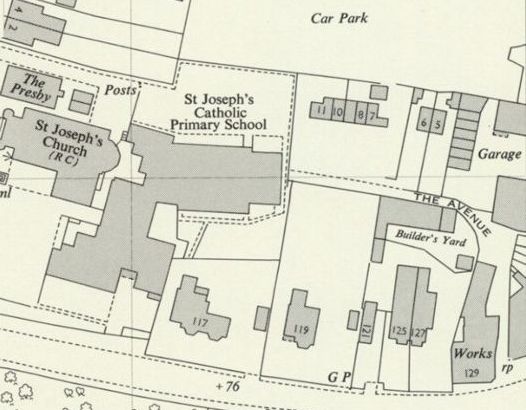
(National Library of Scotland)
The final property which was part of Samuel Hammond’s original ownership was Millfield, formerly known as Field Cottage (113 St Mary’s Lane) which was immediately west of Mavisbank and was later on the corner of Champion Road after it was built.
According to Wilson, Field Cottage was built around 1816 by a Mr William Garrard or Garrett who kept a small grocers shop there. He was succeeded in the early 1820s by William Hook, who described himself as a grocer and tea dealer who had taken over this “old established concern”. In 1841 Field Cottage was owned by Isaac Meakings and was occupied by Richard Henry Smith and later by Henry St John Joyner. By 1848 Daniel Jackson was the owner, and the house was occupied by Thomas Turner, later of “Hoof Hall”, mentioned above.
Wilson lists a series of occupiers of Field Cottage in the following decades before it was renamed Millfield House before 1871 when Thomas Wade Towson, a retired farmer, was the occupier. After Henry Huggins, a London born seed merchant left there, Millfield House was bought in 1894 for £550 by Alfred Savill, the founder in 1855 of Savill & Sons, the well-known land and estate agents and surveyors’ business. Alfred Savill’s son Edwin (later Sir Edwin 1868-1947) occupied Millfield House until 1902, and Savill & Sons remained the owners for around 20 more years after that.
In 1910 Millfield was described as a detached brick and slated, double-fronted house with six bedrooms and a dressing room, bathroom, WC, three reception rooms, kitchen and scullery. Ralph Neville White was then the occupier, and afterwards a prominent genealogist, Richard Gordon Fitzgerald Uniacke, lived there. George Eve, an auctioneer who worked for Savill & Sons, lived at Millfield in the 1920s before moving to Hoppy Hall, which he bought in 1929.
The site of Millfield House was later redeveloped to form numbers 107 to 113 St Mary’s Lane, and the present building named Millfield House, comprising four flats, was added behind these houses at the bottom of Champion Road.
With thanks to Andy Grant for producing the map and information on Vivian Gould and Thameside Printing (129 St Mary’s Lane).
Also thanks to Canon Stewart Foster, the Brentwood Diocesan Archivist, for providing access to the original deeds for Mavisbank and Ingrebourne (115 & 117 St Mary’s Lane).
Sources and References
Printed sources:
T L Wilson “Sketches of Upminster” (1856) pp.100-101
T L Wilson “History and Topography of Upminster” (1881) p.174
Upminster Tutorial Class “The Story of Upminster: Book 2 Historical Buildings (1)” February 1958
Anthony D Butler “Thirteen Centuries of Witness: a Catholic History of the Upminster District” (1984) pp34-35
Sister M Immaculata R.S.H.M “A history of St Joseph’s Catholic Church, Upminster 1923-1981 (1981)
Rev Stewart Foster “Deceased Clergy of the Diocese of Brentwood: Biographical Summaries” (2013)
Planning Application P1585.22 for 11 Station Road, Upminster RM14 2SJ (2022)
“Lonely cat woman arrives at former Upminster club house” Andy Grant (Romford Recorder 10th January 2025 p34)
“A fire kills the cat lady of Locksley Villa in Upminster” Andy Grant (Romford Recorder 17th January 2025 p34)
Archive Sources:
RC Diocese of Brentwood:
Property Deeds of Mavisbank and Ingrebourne (115 and 117 St Mary’s Lane)
Havering Local Studies:
Upminster Rate Books & Romford Rural District Council and Hornchurch Urban District Council – Building Registers
T L Wilson “Wilson of Upminster Family Records” (1907) Photocopy Havering Local Studies
Essex Record Office:
T L Wilson “Notes, Extracts & Cuttings relating to Upminster and Hornchurch” (T/P 67/4 & 5)
Map of Cranham Hall Estate 1663 (A7028 Box 2)
The National Archives
The Valuation Office Survey (1910-1915): IR 5838464-38474
Census Returns (1871-1921) & 1939 Register (via Ancestry & Find My Past)
 Old Upminster